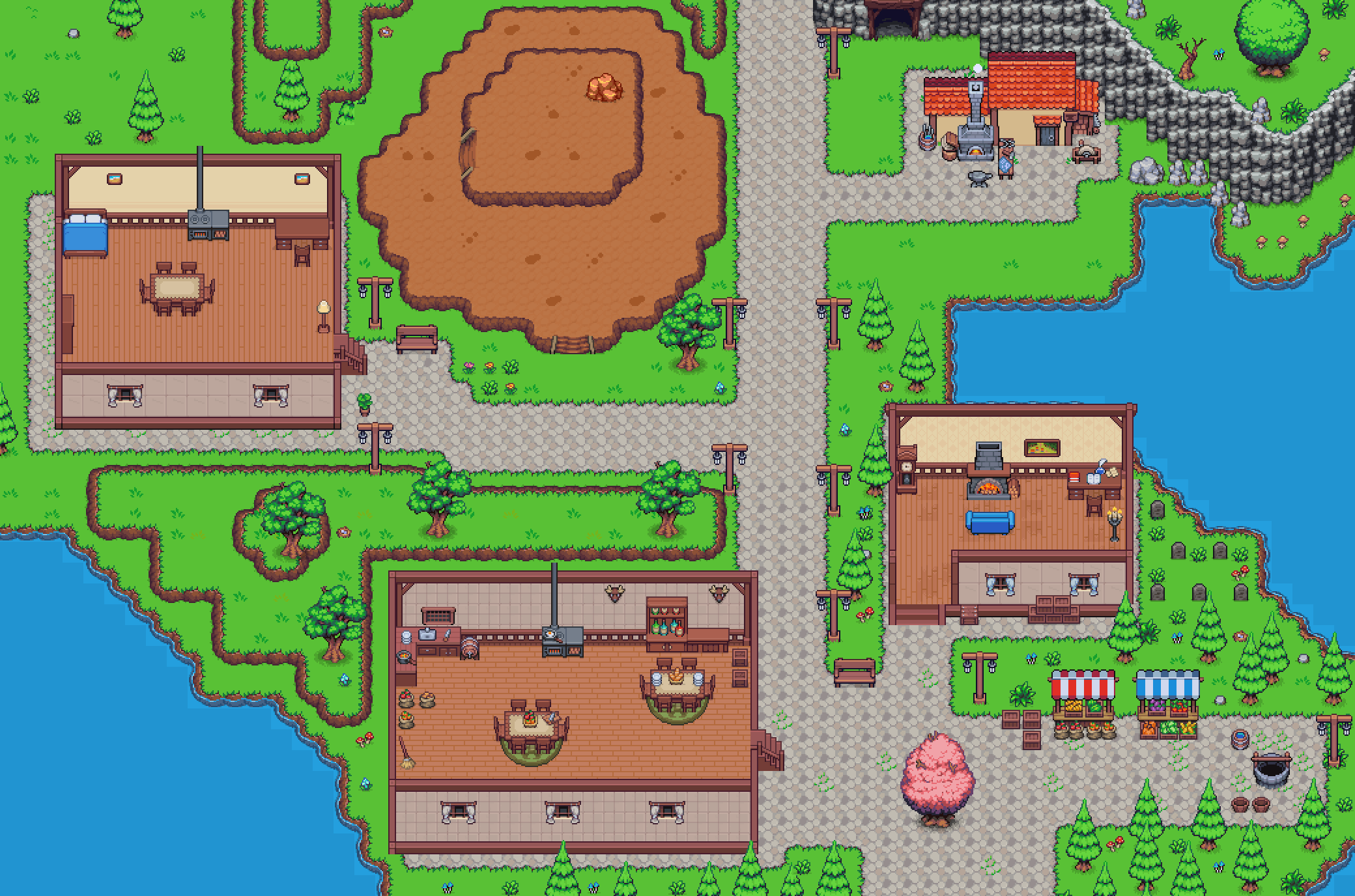
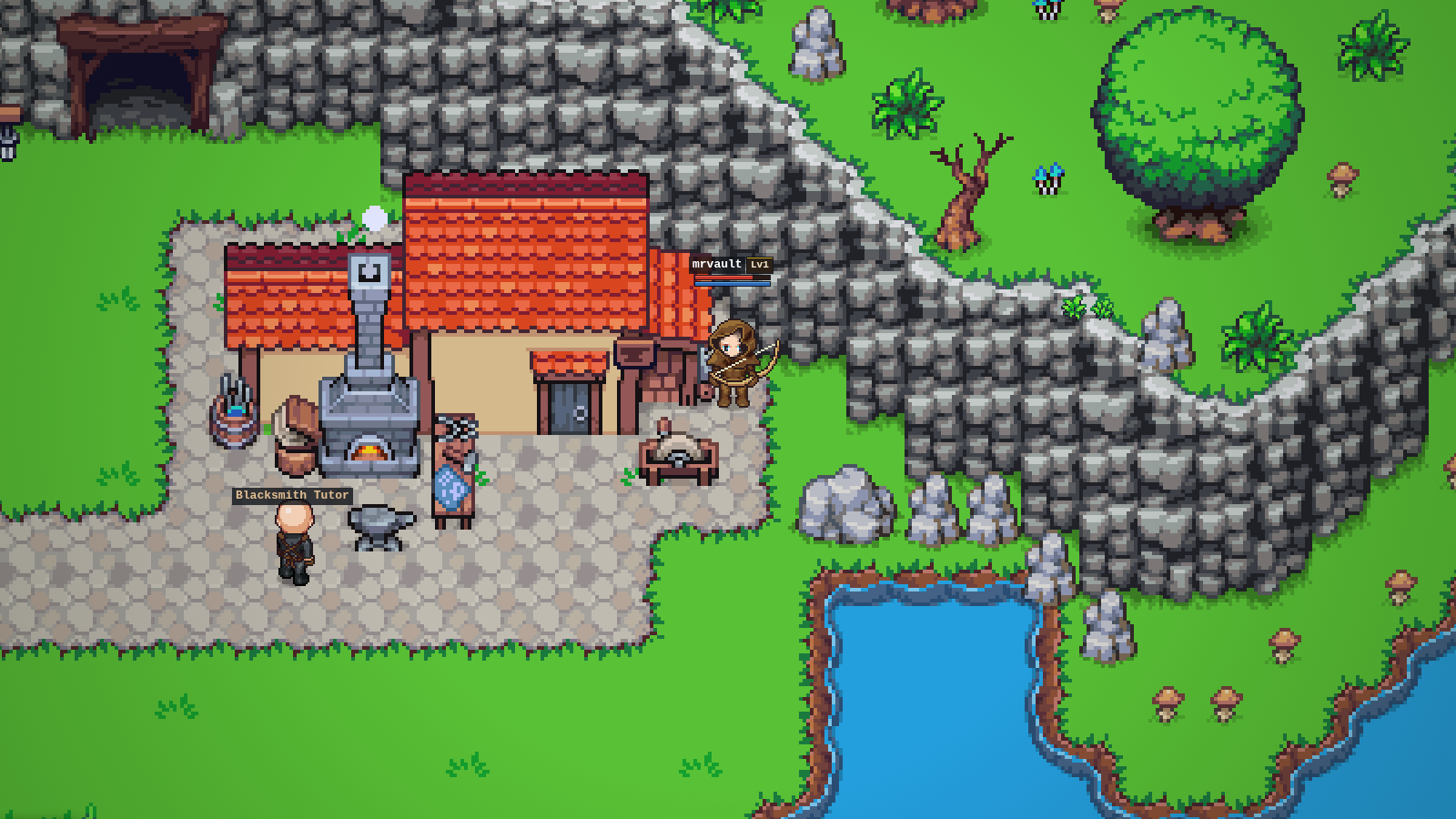
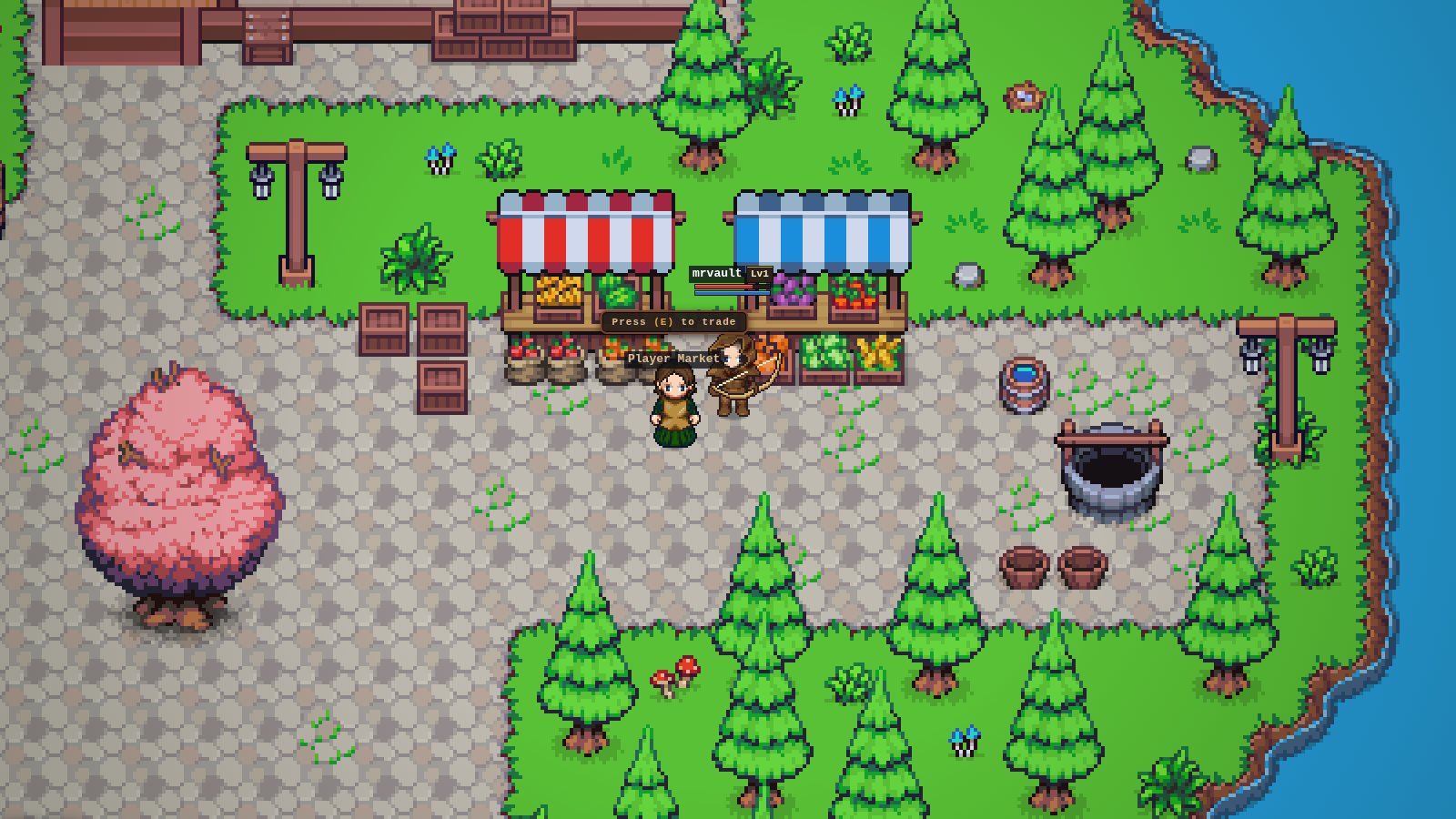
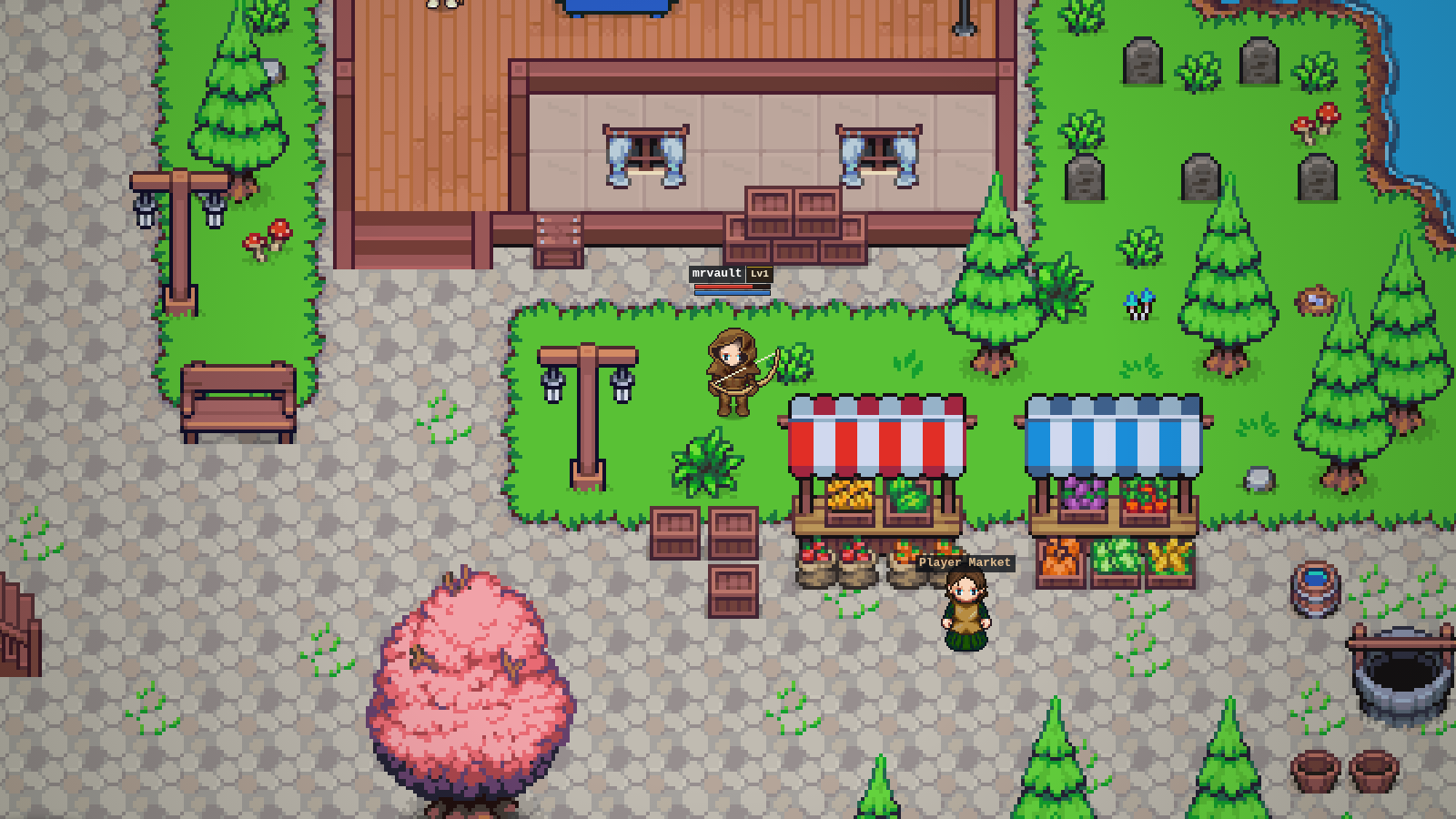
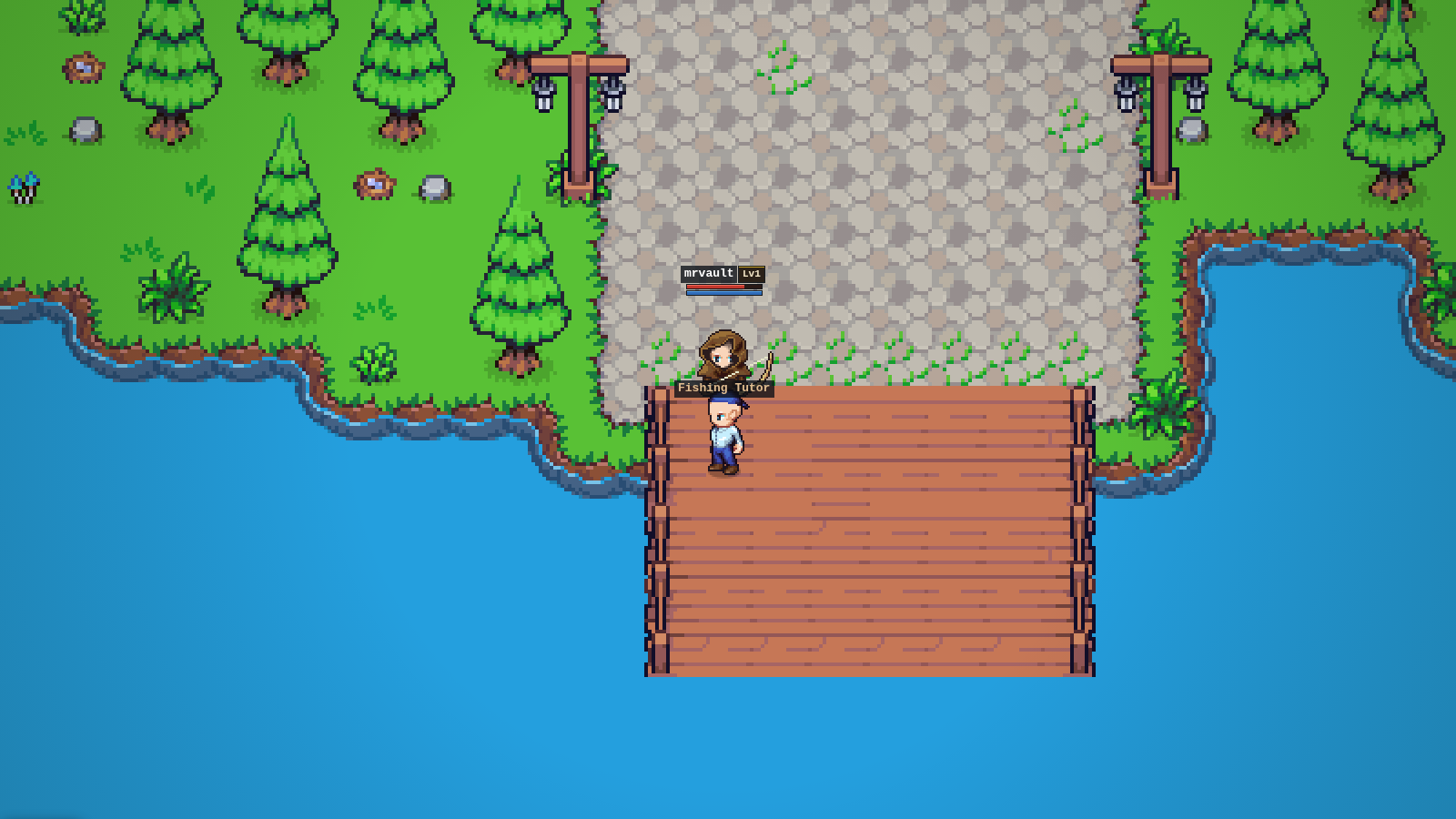
Screenshots, not mock-ups — every one of these is the running game.
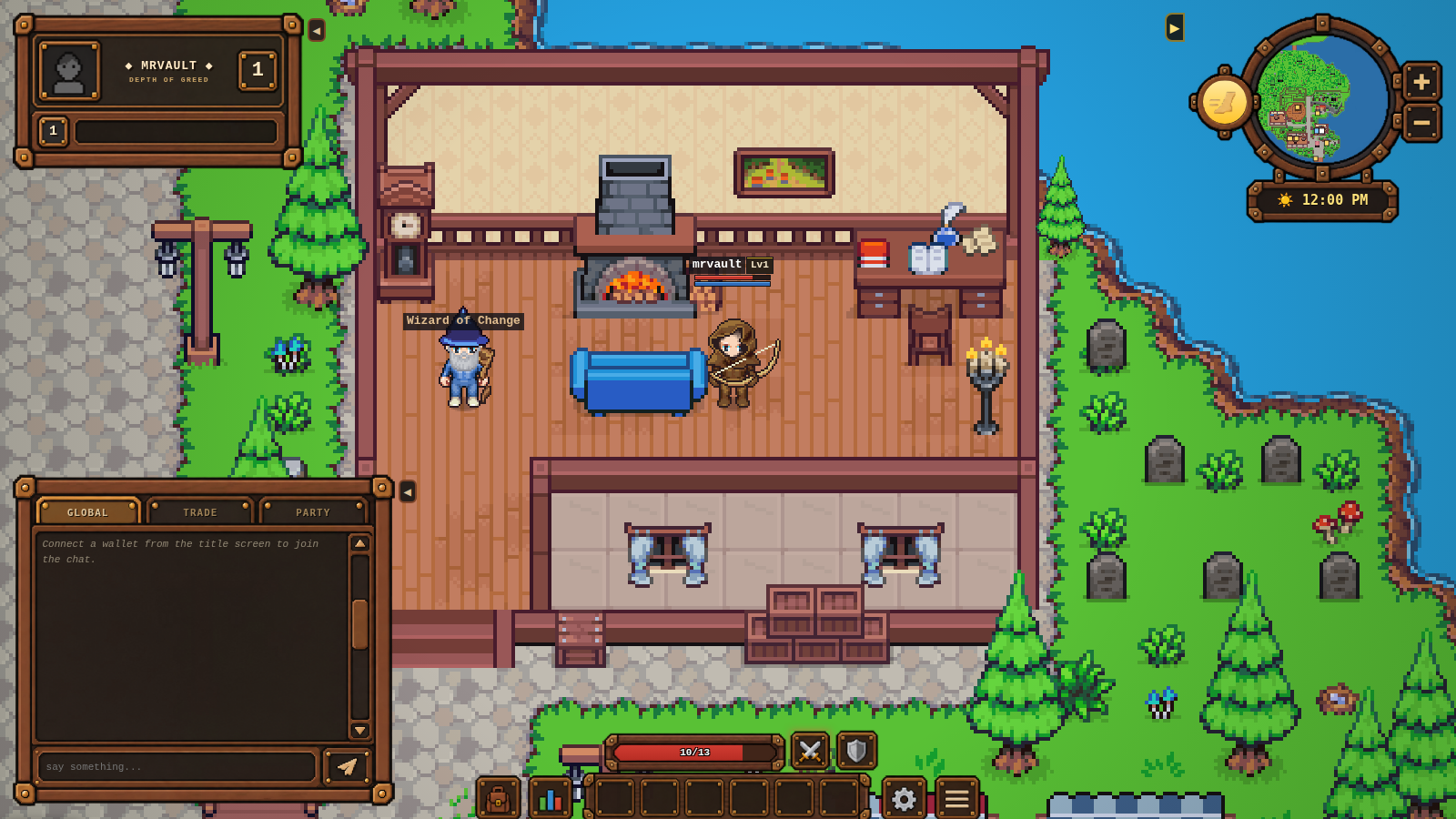
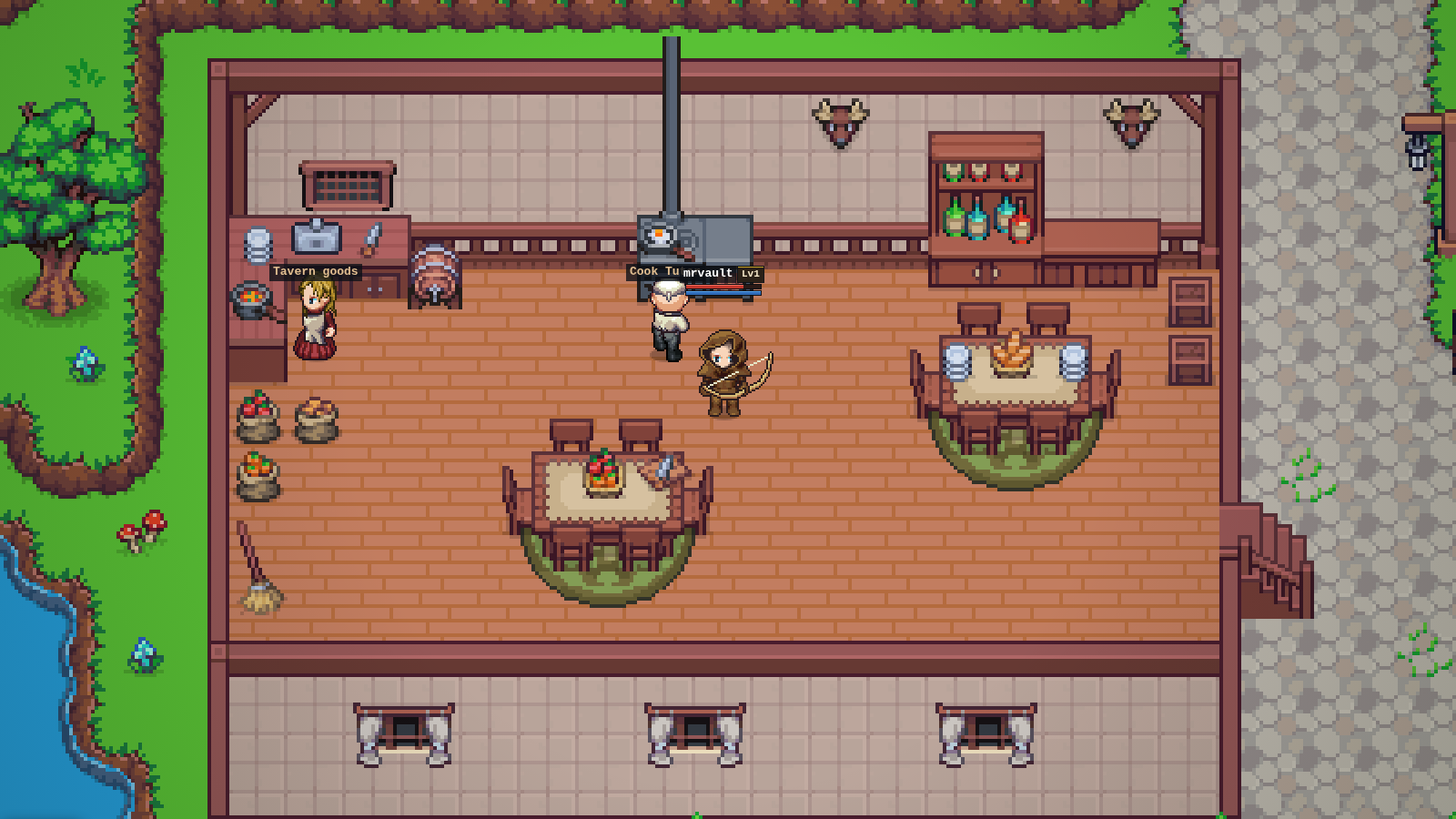
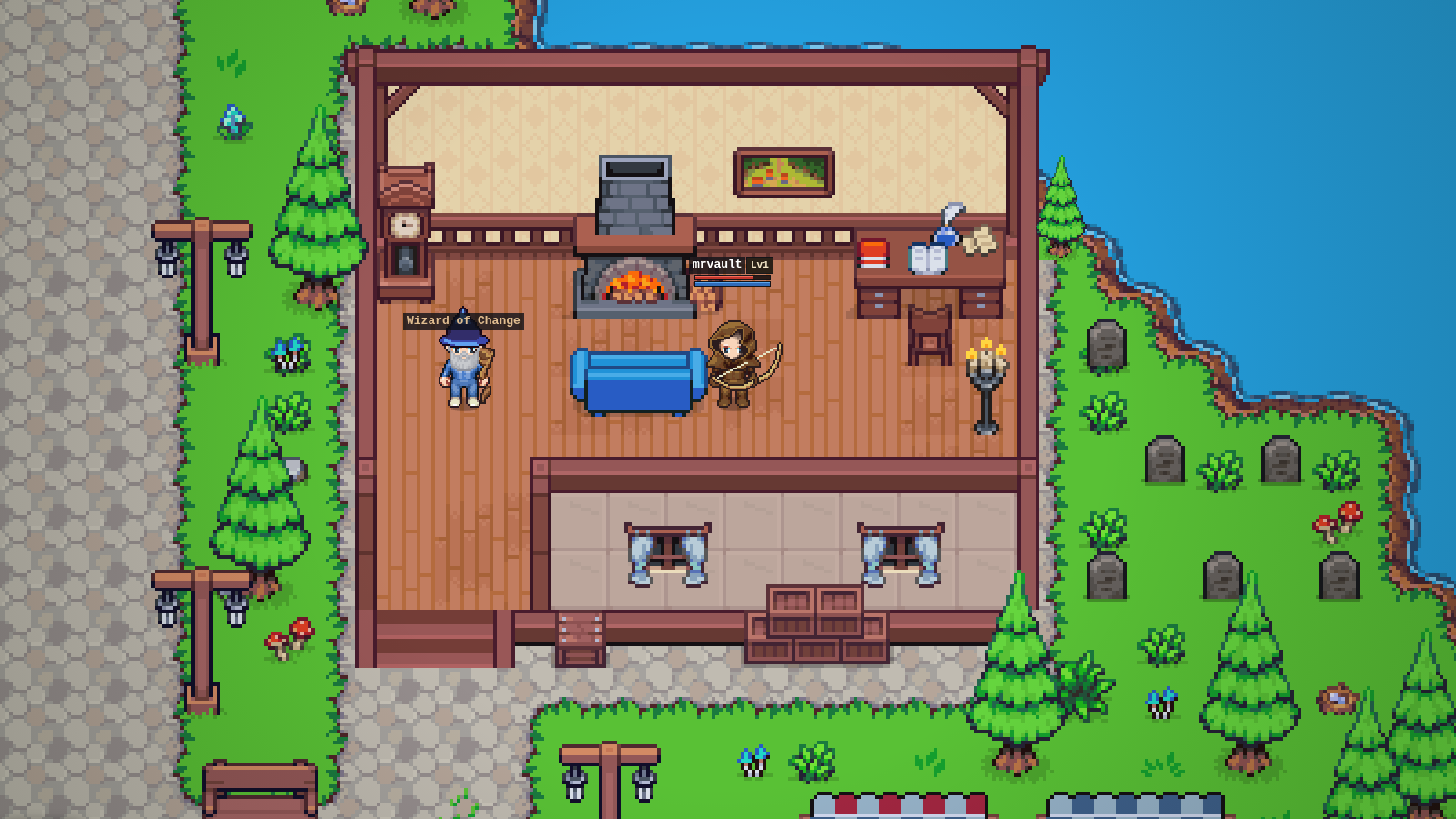
What the game is, in the order you meet it.
One land mass, hand-painted tile by tile. The town is the tutorial: past its steps you are in T1, and over the bridge is T2. There is no zone select and no loading screen — you walk.
The Wizard of Change asks who you are and gives you one kit: a rusty saber and copper plate, a crude bow and leathers, or a crooked staff and mage robes.
It is character bound and it is a single claim. If you want to use something else, you craft it.
WASD to move, left click to attack wherever the mouse is pointing. Nothing is targeted and nothing is locked: arrows, spells and sword arcs fly, and both you and whatever you are fighting can dodge them.
Bows spend arrows. Magic spends mana. Every swing is drawn before the shot leaves.
Woodcutting, fishing, farming, mining, cooking, smithing, ranged, strength, defence, slayer and magic.
Eleven families in the ground: stone, copper, iron, coal, gold and platinum; sapphire, emerald, ruby and diamond speckled through grey rock; and a mana crystal that glows, ground down into the powder that makes mana potions.
Nothing converts one into the other.
The ladder opens when the world does.
Total level, each skill, and the richest accounts on the island — read off the server, which is the only thing that decides what anyone owns. Nothing here is live yet, so there is nothing here: a board with invented names on it would be the first lie on the page.
$GREED, and what the game does with it.
Every player-to-player trade pays a 10% tax in $GREED. Where that goes — how much is burned, how often, and to which wallet — is the dev's call and it has not been set yet.
When it is, this section carries the contract address, the burn wallet, the amount burned to date and a link to every transaction, so it can be checked on chain rather than taken on trust.